
Pay off all consumer debt
Goal: Pay off ALL debt (except for the house) as fast as possible.
Step 2: Pay off all debt (except the house) as fast as possible.
According to the Federal Reserve Bank of New York, Americans have over $1 trillion of credit card debt.
According to Edmunds, the average car payment is now over $1,000 per month.
That’s a lot of debt. That’s a lot of your money paying someone else at the end of the month, instead of being able to build wealth.
In a culture where debt is normal, let’s break the cycle.
Let’s get out of Debt as fast as possible. The faster you get out of debt, the faster you can build wealth.
When you have debt, it is usually accompanied by interest. Think of interest as a “Tax” for borrowing the money. The longer you keep the loan, the more interest that accrues.
Example: If you keep a balance of $2,000 on a credit card for a year, with an annual interest rate of 22%, you will pay $440 in interest just to keep the debt. ($2,000 x .22 = $440) That interest doesn’t just accrue at the end of the year, the interest accrues daily and monthly. Monthly, the interest rate on that $2,000 balance would be 1.8% (.22/12 = .018) or $36.66.
Examples of Consumer Debt
Credit Card Debt
College Loans
Payday Loans
Medical Debt
Personal Loans
Car Loans
Boat Loans
Home Equity Line of Credit (HELOC)
Imagine this.. Instead of spending $300 a month on a Credit Card payment or Student Loan payment each month, you invested that $300 each month in a mutual fund that returns 8% per year.
After 20 years, you would have $176,706! You would have contributed $72,000 and growth would be $104,706!
The earlier you get out of debt and start investing for your future, the longer your money has to grow.
If you take the example and invest for 30 years, instead of 20 years, you would have $447,107!
What about 40 years? 40 years of investing $300 per month in a mutual fund that returns 8% per year would result in $1,047,302!!
Lets go! Let’s get out of Debt!
You control your future.

Debt Snowball
Let’s use the Debt Snowball to pay off debt as fast as possible.
The Debt what?
The Debt Snowball is a method of paying off debt that lists all of your debts in order of smallest to largest. You make minimum payments on all debts except for the smallest debt. Make the minimum payment + as much extra money as you can on the smallest debt. Once the smallest debt is paid off, you will “roll” everything you were paying in the smallest debt into the next smallest debt. As you pay off each debt, the amount you “roll” into your next debt increases, just like rolling a snowball, it gets bigger as it rolls.
How to use the Debt Snowball:
List all of your debts smallest to largest.
Make minimum payments on ALL of your debts EXCEPT the smallest debt.
Pay the minimum + any extra money you can find in your budget towards the smallest debt each month.
Once you pay off the smallest debt take all of the money you were paying on that debt (minimum payment + any extra money in your budget) and apply it to the next smallest debt. (As you pay off each debt, make sure you close the account, so you do not go back into debt)
Continue the process until you have paid off all of your debt.
We are not concerned with interest rates. Our goal is MOMENTUM and progress.
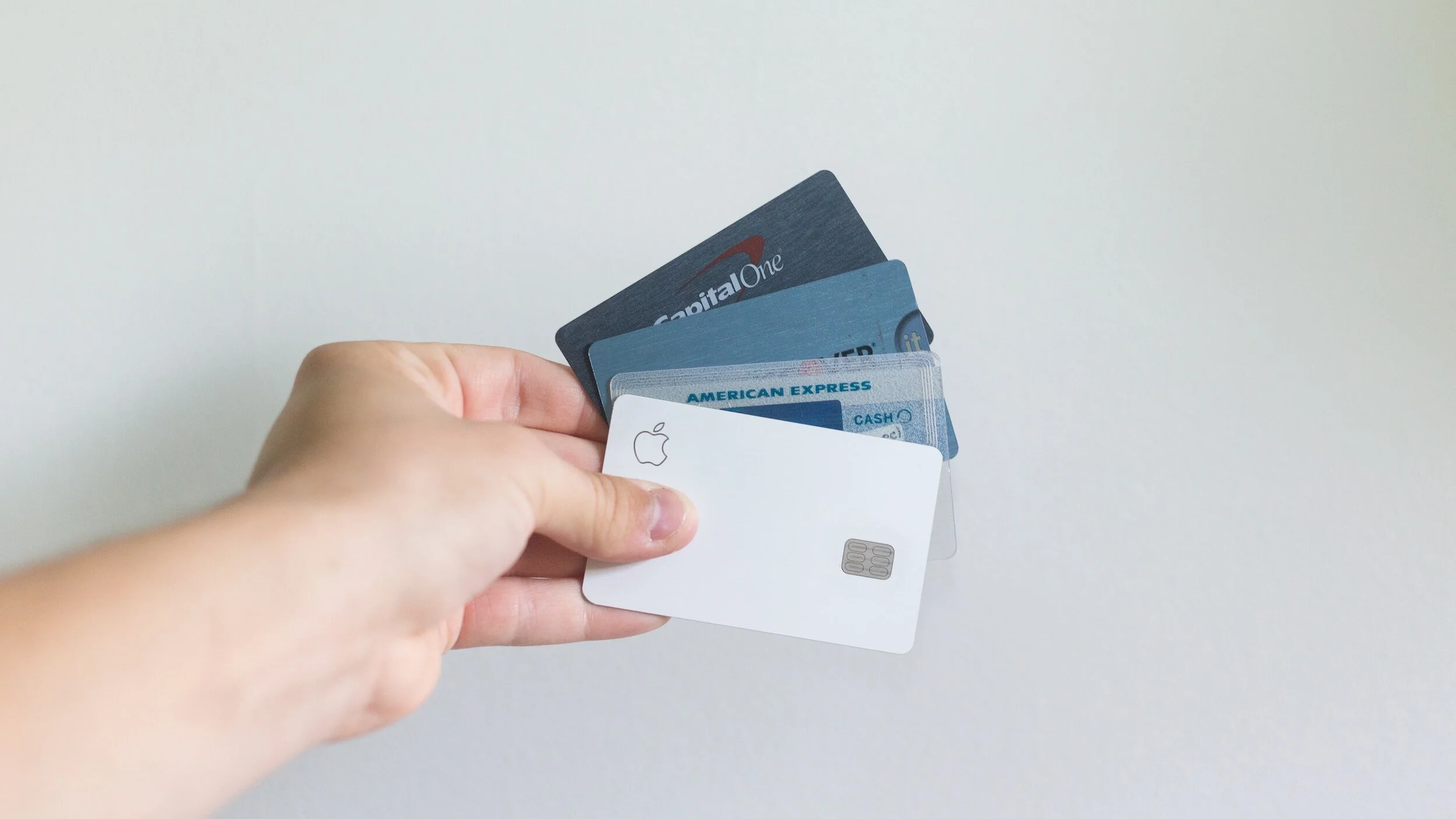
Stop Using Your Credit Card
Hear me out..
If you are in debt, and trying to get out of debt, the last thing you need is to create more debt, by using a credit card. (Even a 0% Interest Card)
More than likely, some of the debt you are trying to pay off is Credit Card debt.
Imagine you are at the beach and you are digging a hole in the sand, but sand keeps falling back into the hole, you are doing double the work to dig the hole.
That is what using a credit card while trying to get out of debt is like.
Instead, try using a debit card or cash. With those 2 options, you can only use the money that you have, and it keeps you from going further into debt.
FAQs
-
Paying off your debt in order of highest interest rate to lowest, regardless off the debt amount is known as the Debt Avalanche.
The goal of using the Debt Snowball is to see progress and build momentum. Get some quick wins, and you are likely to stick with the plan.
I want you to get quick wins.
-
But I get points.
Points are nice, however Points don’t help you get out of debt. When you are in debt and you have a credit card readily available, it is much easier to spend more than you can afford.
Our goal is to get out of debt, not earn points.
It’s highly likely that you are trying to pay off credit card debt, so this is just adding to your debt.
Imagine digging a hole in the sand and sand falling back into the hole as you are trying to dig the hole. That’s what continuing to use a credit card while trying to get out of debt is like.
-
Yes! We are not focused on the interest rate. We are focused on getting out of debt. Even though there is 0% interest, it is still debt.
Place this debt in your debt snowball, and work the debt snowball from lowest balance to highest balance.
-
It depends..
When you consolidate, you still owe the same amount, but instead of a few small loans, you now have a single large loan.
If you can get a significantly lower interest rate by consolidating your student loans, it may be worth investigating.
Depending how fast you can attack and pay off your loans, it may not be worth consolidating your student loans.
-
No!
When you take out a HELOC, you are using your house as collateral. if you don’t pay, your house is at risk.
Also, this is just moving debt around, and not addressing the debt.
Do NOT borrow against your house.
-
It depends.
How motivated are you to get out of debt?
How tired are you of paying other people instead of yourself?
How motivated are you to start building wealth?
The faster you get out of debt, the faster you can start building wealth.
-
No!
By moving all of your debt to a “low interest” credit card, you are just moving debt around.
The goal is to break the habit/behavior of using debt.
When you move all of your debt to a single consolidated source, you still have to pay the debt.
Instead of having a few smaller debts that you will see progress on fairly quickly in the Debt Snowball, you will now have one big debt, and progress may feel like it takes forever.